
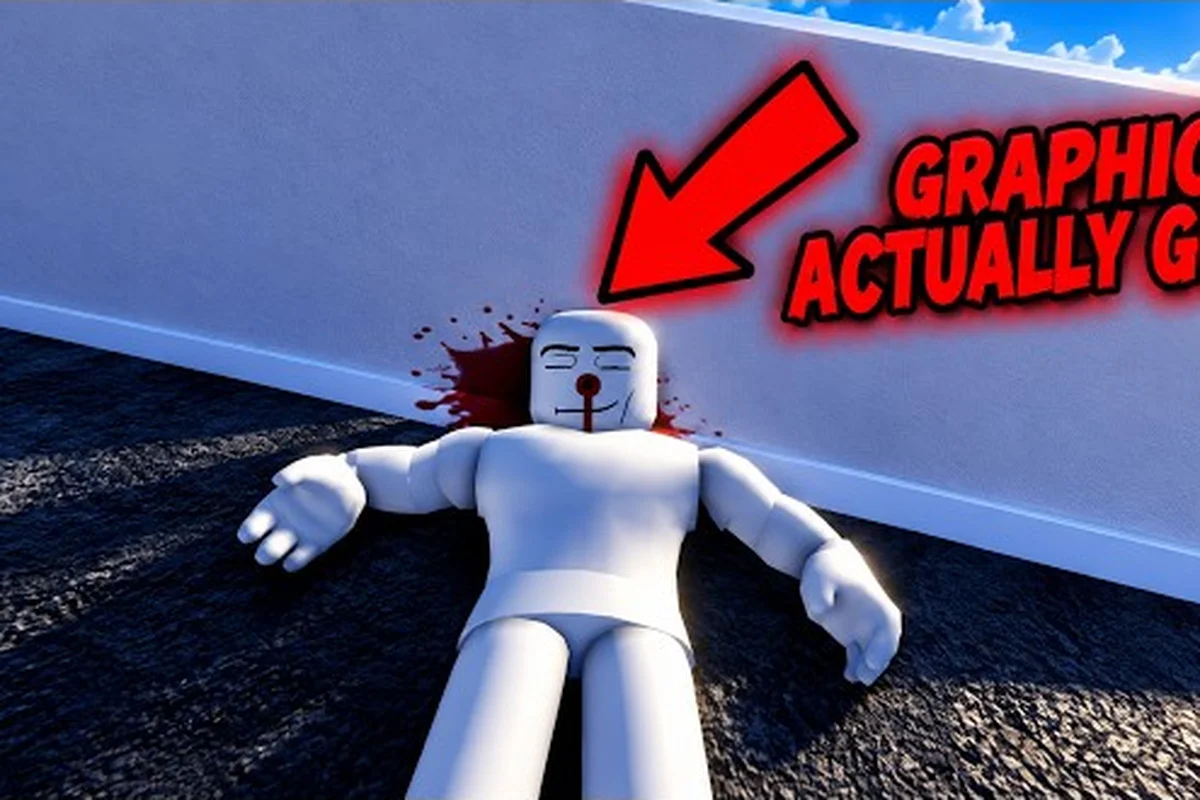
Ragdoll reality updates matter because the October launch and Halloween expansion reshaped the game’s core zombie systems. Get the confirmed changes, known gaps, and practical impact in one reliable guide.
Updates: Launch and Halloween Overview
Ragdoll Reality is a Roblox physics sandbox developed by the group I am eating, and its early trajectory has been shaped by a rapid launch followed by a major seasonal addition. The experience launched on October 13, 2026, then received a Halloween update that expanded the graveyard, infection, and wave-survival mechanics. These changes matter because they altered what players can experiment with instead of adding a disconnected seasonal event.
The official Ragdoll Reality page also indicates that the developer intends to release updates weekly and encourages players to like and favorite the experience for notifications. However, the page does not currently provide a formal changelog archive, numbered versions, or dated patch notes. That distinction is essential: players can identify the major changes, but they cannot yet reconstruct every balance adjustment from official historical records.
| Timeline event | Confirmed information | Practical significance |
|---|---|---|
| October 13, 2026 launch | Ragdoll Reality became available on Roblox | Established the game’s initial release state |
| Halloween expansion | Added graveyard conversion, zombie classes, infection, and Horde mode | Expanded the sandbox around zombie behavior |
| Weekly-update intention | The official page mentions regular development | Players may not receive simultaneous patch notes |
| October 25 public data | Roughly 9.55 million visits, 55,700 concurrent players, and 34,700 favorites | Shows strong early interest, though these are snapshots rather than permanent totals |
The launch information is not limited to the release date. Public page data captured on October 25 listed approximately 9.55 million visits, around 55,700 concurrent players, and 34,700 favorites. Its like-to-dislike ratio was roughly 9,761 to 2,142. These figures suggest that the Halloween release arrived during a period of substantial attention, although they do not prove how many people continued playing after the first weekend.
Ragdoll Reality is also built around a single-player experience. The public listing reports a maximum of one player per server and does not enable VIP servers, so the current design should not be compared with cooperative Roblox games. Anyone seeking the official history can use this article as a checkpoint for the Ragdoll Reality launch, the first Halloween content, and the documentation gaps that remain.
Launch Facts and Current Status
The launch established Ragdoll Reality as a physics-based sandbox where objects, characters, and environmental interactions create emergent results. Its most significant early milestone was the October 13 release, which came less than two weeks before the seasonal update made zombie conversion and infection central to the experience. The short interval explains why the game’s public identity is already associated with the Halloween systems rather than with a long, documented season of pre-launch updates.
What the Page Actually States
The official listing identifies the developer as I am eating and describes Ragdoll Reality as a Roblox physics sandbox. It reports the launch date, current public engagement, and the Halloween feature set. It also makes a broad commitment to weekly updates and asks players to enable notifications through the platform’s like-and-favorite prompt. That announcement is encouraging, but it should not be treated as a release schedule with exact dates or content descriptions.
| Confirmed item | Status | Confidence and limitation |
|---|---|---|
| Launch date | October 13, 2026 | Directly listed on the official game page |
| Halloween content | Added | Identified on the official page |
| Weekly updates | Intended | No precise schedule is published |
| Changelog archive | Not available | No dated historical list appears publicly |
| Version numbers | Not available | The experience does not use visible versioned patch notes |
| Active reward codes | Unsupported | No code list or redemption system is listed |
| Badge system | No public badges found | The relevant badge data returned empty |
| Multiplayer | Not supported at launch | Public server listing showed one-player maximum |
This makes the current Ragdoll reality changelog incomplete by design, not necessarily because the development team made no smaller changes. Weekly maintenance may adjust physics, movement, interface behavior, or balance without those edits appearing in a public archive. As a result, claims about exact patch contents should be treated cautiously unless they are shown in the game, confirmed by the developer, or supported by consistent community reports.
Why codes and badges need a separate check
Players often search for redeemable codes and badge-based rewards whenever a Roblox experience grows quickly. As of October 25, however, the official page lists no code-redemption system, and the available badge data is empty. A guide promising active codes would therefore be misleading. The absence of published codes also does not establish that a temporary event code can never appear; it only means that no verifiable code existed in the checked official sources.
The Ragdoll reality notification system is the better-supported way to keep informed about current activity. Players can watch the official game page, enable the Roblox experience’s favorite notification, and check for visible in-game notices after patches. Because there is no archived changelog, combining those signals is more dependable than relying on an unsourced rewards list.
For a compact view of the launch and its current documentation quality, compare what the game has with what its official presentation does not yet offer:
| Resource | Available now | Missing detail |
|---|---|---|
| Official game page | Release facts, feature overview, update intention | Full historical notes |
| In-game notices | Potential patch information | A permanent searchable archive |
| Community testing | Player observations about balance and behavior | Developer-confirmed explanations |
| Social announcements | Occasional feature notices | A consistent changelog format |
This launch record provides a useful baseline. Before exploring the seasonal systems, note that the most important distinction is between confirmed content and inferred future behavior. The former is documented by the official page; the latter remains speculation until an announcement appears.
Patch: Halloween Zombie and Infection Changes
The Halloween patch delivered the clearest set of additions since launch. Its centerpiece is a graveyard conversion point, where throwing a dummy into the graveyard produces a zombie. This creates a physical sandbox loop rather than a simple menu-based enemy spawn: players select an object, place it in the right location, and trigger a transformation through the environment itself.
Graveyard conversion
The conversion feature is the foundation of the update. Instead of only encountering enemies through a prebuilt arena, players can produce them by moving a dummy into the graveyard. That makes placement, timing, and experimentation important. The official page does not publish a conversion cooldown, input sequence, or probability, so those details cannot be stated with certainty.
| Halloween element | Confirmed behavior | What remains undisclosed |
|---|---|---|
| Graveyard | Converts a thrown dummy into a zombie | Cooldown, range, and chance |
| Zombie pursuit | Zombies chase, pounce, and bite | Speed values and detection range |
| Infection | A bitten dummy becomes infected and can convert | Bite damage and infection chance |
| Horde button | Starts a wave-survival mode | Wave count, enemy cap, and rewards |
| Zombie classes | Slow, normal, and fast variants | Exact speed or health multipliers |
The conversion point also changes how players can test setups. A player can create a zombie, observe its movement, and then place additional dummies around the graveyard to test crowding or infection chains. Because the game is a physics sandbox, those interactions may produce results that no fixed mission script could anticipate.
Three zombie speed classes
The official feature description identifies slow, normal, and fast zombie classes. The names indicate a movement-speed hierarchy, but they do not establish numerical multipliers or separate health pools. Players should therefore treat “fast” as a relative category rather than assuming a fixed 1.5x or 2x advantage. Exact values may vary with later tuning.
| Class | What the official source confirms | What players can reasonably observe |
|---|---|---|
| Slow | A zombie class with slower movement | How quickly it crosses open terrain and handles obstacles |
| Normal | The middle named speed class | Whether it offers a practical balance for testing |
| Fast | A zombie class with faster movement | How quickly it closes distance and applies pressure |
The Horde update overview provides a closer look at how these categories fit into the seasonal mode, while the official page remains the source for the existence of the three classes. No verified evidence currently supplies zombie health, exact bite damage, or the total wave population, so precise stat tables would create false confidence.
Infection and conversion chain
A bitten dummy is described as infected, and that infected dummy can convert. This makes the zombie system potentially contagious through a two-step chain: a zombie bites a dummy, the dummy becomes infected, and the infected dummy can later become a zombie. The wording is important because it does not say that every bite instantly creates another zombie or that infection always spreads under every circumstance.
The missing variables include infection chance, bite interval, conversion range, and whether conversion requires another grave interaction. The public information does not answer those questions. In practical terms, players should test the sequence in an isolated area, observe whether the infected state changes its behavior, and avoid assuming that every contact produces the same outcome.
Changelog: What Is Confirmed and What Is Missing
A complete changelog should distinguish released content from planned work, but Ragdoll Reality does not yet provide a traditional public archive. The official page promises weekly updates without dated entries or version numbers. As a result, this Ragdoll reality changelog tracks the major milestones that can be verified, including the launch, the Halloween expansion, and the features connected to it.
| Changelog state | Available information | Confidence level |
|---|---|---|
| Major releases | October 13 launch and Halloween expansion | Confirmed |
| Feature additions | Graveyard conversion, three zombie classes, infection, and Horde mode | Confirmed |
| Future update timing | Weekly updates are mentioned, but no date is supplied | General intention only |
| Exact weekly patches | No dated archive or version numbering | Unavailable |
| Balance values | No published health, damage, or wave totals | Unavailable |
| Reward codes | No listed code system | Unsupported as of October 25 |
| Badges | No public badges returned | Unsupported as of October 25 |
Reading announcements without a formal changelog
The main Ragdoll reality announcement visible at launch is the developer’s intention to update the experience weekly. That statement is useful, but it does not establish whether every week will include major content, small fixes, or a mixture of both. Announcements should also be judged by whether they name a feature, date, or behavior change. A general reference to “weekly updates” is less specific than a notice describing graveyard conversion or a new zombie category.
Because the game lacks public version numbers, a player can create a simple personal record. Record the date, the visible feature affected, and the exact behavior observed. This approach is more precise than labeling everything “the latest patch.” It also helps when comparing later changes against the original Halloween release.
| Observation method | Strength | Limitation |
|---|---|---|
| Official game-page notices | Developer-level source | No permanent archive |
| In-game notices | Close to the current client | May disappear after replacement |
| Personal testing notes | Captures actual behavior | Subject to individual test conditions |
| Community reports | Adds comparative context | Requires confirmation before treating claims as fact |
| Undated reposts | May spread quickly | Often lack evidence or original context |
The detailed patch notes article can serve as a companion reference for the Halloween additions, but the broader point remains: the absence of official version history limits precision. Players should not describe small visual differences as confirmed patches until the developer or the current game client provides evidence.
What has not been confirmed
Several common update subjects remain unsupported. The official source does not publish a code system, a badge list, exact zombie statistics, or a detailed wave format. It also does not state that private servers or cooperative sessions are available. While some community observations may eventually clarify behavior, player reports should be presented as community testing rather than converted into definitive facts.
This evidence standard also protects the broader Ragdoll reality updates record from becoming a collection of rumors. A feature can be real without having precise documentation, and a feature can be planned without being released. The useful distinction is clear: the Halloween additions are confirmed; the missing numbers and future schedule are not.
Notification and Update Tracking Guide
Tracking Ragdoll Reality updates works best when the player combines official notices with in-game testing. The official page is the strongest source for permanent facts, while the live client can reveal temporary changes before they receive a detailed written description. A simple routine can separate signal from rumor and reduce the risk of mistaking a visual glitch for a new feature.
A practical weekly check routine
Start by opening the official Roblox listing and reviewing its latest description and notice area. Check whether the Halloween wording has changed, whether a new date appears, or whether the developer adds detail about a forthcoming feature. Then open the game and compare the current graveyard, zombie behavior, infection system, and Horde interface with your previous notes.
| Check | Action | What to record |
|---|---|---|
| Official listing | Read the current description and notices | New feature names and dates |
| Notification settings | Favorite or follow the experience | Enabled platform alerts |
| In-game client | Inspect menus and core areas | Visible interface or behavior changes |
| Controlled test | Repeat an earlier scenario | Reproducible differences |
| Community reports | Compare multiple player accounts | Consistent claims versus isolated observations |
| Personal archive | Date each observation | A usable local changelog |
This routine is particularly important when a small interface change accompanies a larger balance adjustment. Without a version number, a dated record is often the only practical way to reconstruct the sequence. A table comparing a Horde attempt before and after a suspected adjustment can reveal changes in pacing, enemy speed, or conversion behavior even when the developer has not documented exact values.
What deserves immediate follow-up
Some discoveries require prompt verification because they affect how players interact with the game. A new zombie class, a changed infection sequence, or a removed button is more consequential than a minor cosmetic variation. Record the original observation, reproduce it, and then look for a matching official announcement before treating it as final.
The next-update tracker can help organize the waiting period, but the official page remains the deciding source. A weekly commitment is not the same as a fixed release day. Announcements without dates should be treated as intentions, while dated notices provide a stronger basis for planning.
Players should also distinguish notification from changelog. Enabling alerts can tell them that the developer has posted something, but it cannot reconstruct a missing archive. The notification signal is a prompt to check; the official notice, current client, and reproducible test establish what actually changed.
Practical Impact of the Halloween Expansion
The Halloween expansion changes both the subject matter and the experimental possibilities of Ragdoll Reality. A graveyard that transforms thrown dummies gives players a repeatable physical trigger, while infection allows effects to spread between objects. The Horde button then provides a structured survival scenario built around those same systems. This combination supports both sandbox experimentation and wave-oriented play.
Sandbox experimentation
The clearest use of the update is testing cause and effect. Players can experiment with where a dummy enters the graveyard, how far zombies travel, and what happens when an infected dummy is placed near other objects. Since precise conversion cooldowns and probabilities are not public, repeated trials are the most valid way to learn local behavior. The same principle applies to melee encounters, where a player can compare a slow zombie with a fast one in a controlled route.
| Experiment | Variables to change | Information gained |
|---|---|---|
| Graveyard conversion | Placement distance and dummy type | Trigger consistency and useful positioning |
| Speed comparison | Zombie class and open space | Relative pursuit pressure |
| Infection test | Zombie contact and target location | Conversion reliability and possible chains |
| Horde pressure | Route design and spacing | Chokepoint usefulness |
| Physics interaction | Nearby objects and terrain | How obstacles affect movement |
Players should keep one variable stable whenever possible. If the test area, route, and target all change, it becomes difficult to tell whether a new result came from conversion timing, enemy speed, or an unrelated physics effect. The Ragdoll Reality update summary provides a concise baseline that can make side-by-side comparison easier.
Wave-survival preparation
The Horde button starts a wave-survival mode, but the official page does not reveal the number of waves, enemy population, health values, or reward structure. A player should therefore prepare around the mechanics that are confirmed rather than assuming a conventional power curve. Open sightlines increase the value of fast zombies, while narrower paths can make slow variants more manageable.
Useful preparation includes learning where conversion occurs, determining whether infected dummies can be isolated, and observing how enemy classes behave around obstacles. Because the server is single-player, preparation must account for every action occurring in one session. There is no teammate to cover a flank or revive a failed attempt, at least according to the public server configuration captured on October 25.
The result is a practical conclusion: the Halloween update adds meaningful zombie systems, but it does not provide every number required for optimized play. Experienced players can still extract useful knowledge through controlled tests, while newer players can learn the core loop by focusing on conversion, infection, and the three speed classes.
Confirmed Update Record and Practical Takeaways
The clearest Ragdoll reality updates record begins on October 13, 2026, with the Roblox launch, and then expands during the Halloween release through graveyard conversion, slow, normal, and fast zombie classes, infection, and the Horde mode. The official page also states that weekly updates are intended and recommends using Roblox notifications to follow activity.
The major limitation is documentation. There is no public version-numbered changelog, no archived list of weekly patch entries, and no published table for zombie health, bite damage, conversion chance, or wave population. There is likewise no verified code system or public badge collection as of October 25, 2026. The absence of a formal archive means that “latest patch” claims require careful verification rather than blind acceptance.
For players, the best response is a repeatable tracking process: check the official listing, record visible changes, reproduce unfamiliar behavior, and label community reports as provisional unless they match a developer notice. The game’s early popularity—roughly 9.55 million visits and 55,700 concurrent players in the captured public snapshot—suggests a large audience is already watching, but popularity does not fill the gaps in the official record. The Halloween systems are confirmed; the precise balance numbers and next update date are not.
Frequently Asked Questions
When did Ragdoll Reality launch?
Ragdoll Reality launched on Roblox on October 13, 2026, according to its official game page. The Halloween expansion arrived later that month and added graveyard conversion, slow, normal, and fast zombie classes, infection, and Horde mode. The public listing does not provide a version number or complete launch-day changelog, so the confirmed release date is more precise than the historical patch record.
What changed in the latest confirmed Ragdoll Reality update?
The latest clearly documented content is the Halloween expansion. Throwing a dummy into the graveyard produces a zombie, bitten dummies can become infected, and infected dummies can convert. The update also added three zombie speed classes and a Horde button for wave survival. Exact health, damage, wave count, and conversion values were not published on the official page.
Does Ragdoll Reality have a public changelog?
Ragdoll Reality does not currently have a complete public changelog with dated entries or version numbers. The official page mentions weekly updates and provides current feature descriptions, but it does not preserve a full historical list. Players can maintain a personal log using the game client, official notices, and reproducible tests, treating community observations as provisional until confirmed by the developer.
Are there working codes or badges in Ragdoll Reality?
No active codes or public badge rewards were supported by the available official information as of October 25, 2026. The game page lists no code-redemption system, while badge data returned an empty collection. A future event could still introduce either feature, so players should rely on official announcements rather than old code lists. The favorite notification remains the clearest supported way to monitor future additions.
How can players receive Ragdoll Reality notifications?
Players can use the Roblox experience’s favorite and like prompt to enable platform notifications, then regularly check the official game page and the game client. This matters because weekly update plans are not paired with a published release calendar. The notification tells players to check for news, while official notices and repeatable in-game comparisons confirm whether a change is real and persistent.