
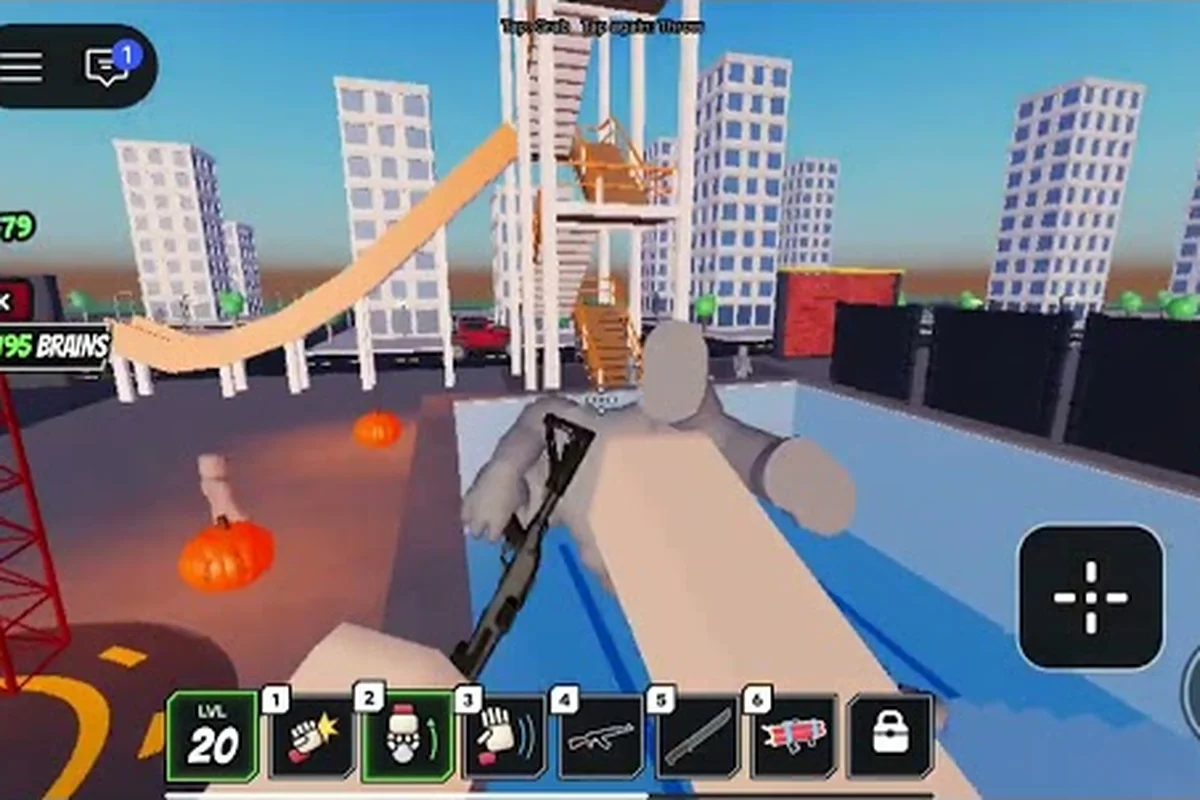
Ragdoll Reality dummy testing demonstrates how location, applied force, and handling alter each target’s physical response. For example, striking the same dummy on hard ground can produce a sharper impact response than testing it on a soft surface, while changing the grab point shifts the direction of the throw. Comparing impacts, grabs, throws, and dismemberment case by case helps clarify how the sandbox’s physics and limb-damage systems react under controlled conditions.
Dummy Testing Basics
Ragdoll Reality dummy testing is most useful when you separate visible physical outcomes from undocumented damage values. The official Ragdoll Reality game page describes reactions that occur where the impact lands rather than through a published health system. That distinction makes controlled experiments essential: hit the same body area, repeat the action, and record the result.
The game’s dummies are interactive test subjects within a physics-driven sandbox. They can stagger, fight back, run away, recover, and sometimes resume standing after a fall. Their limbs can also detach, and wounds can bleed. However, the official page does not publish health totals, damage thresholds, joint limits, gravity settings, or limb mass, so exact damage formulas cannot be stated responsibly.
| Test variable | What to change | What to observe | Why it matters |
|---|---|---|---|
| Impact point | Head, torso, arm, or leg | Reaction, balance, recovery | Shows how location-based reactions work |
| Impact force | Light, medium, or strong hit | Stagger duration and displacement | Separates force from placement |
| Handling method | Push, grab, carry, or throw | Grip behavior and body trajectory | Tests sandbox physics rather than damage |
| Body condition | Intact, wounded, or injured limb | Mobility and available responses | Shows how injuries affect movement |
| Environment | Open ground, obstacle, or graveyard | Collision and conversion behavior | Adds environmental variables |
For a broader inventory of available subjects, see Ragdoll Reality All Dummies: Types and Reactions Explained. That reference helps distinguish a dummy’s general role from the specific reactions observed during a controlled test.
What Are Dummies in This Sandbox?
Dummies in Ragdoll Reality are interactive humanoid bodies built around impact location and physical reaction. They are not conventional training mannequins that stand still and absorb every strike identically. Depending on what happens to them, a dummy may limp, crawl, clutch an injured area, stagger, flee, fight back, or recover from the ground.
This explains the recurring question about what dummies are and how they behave. They function as a bridge between ordinary combat and emergent physics: the player supplies an action, while the game visually resolves it through the affected body part. The official description supports that interpretation, but it does not establish conventional HP categories or deterministic damage values.
Treat a dummy as a reaction system rather than a damage calculator. The clearest result is often the physical change: an arm hangs after an arm strike, a leg hit produces limping or crawling, and a powerful impact sends the body sliding or tumbling. Those outcomes are observable, repeatable, and more reliable than attempting to infer an unpublished numerical threshold.
Designing a Repeatable Test
A useful test changes one variable at a time. If a player alters position, tool, direction, and force simultaneously, it becomes difficult to determine which factor produced the result. For ragdoll reality dummy explained as a practical process, use a simple baseline, then introduce one controlled variation.
-
Place the dummy on open, level ground away from walls and other bodies.
-
Record the body area, action type, direction, and approximate force.
-
Deliver the action once and observe the immediate reaction.
-
Wait for the dummy to settle or recover before ending the trial.
-
Repeat the same action on another area of the body.
-
Record whether the result differs, then check whether the result remains consistent.
Community experience can help identify inconsistent-looking trials, but it should not replace direct observation. Reports from players are useful for improving test design, especially when distinguishing a temporary animation from a persistent injury state. They are less reliable for assigning exact damage or dismemberment thresholds that the official source does not publish.
Dummy Comparison by Target Zone
A strong ragdoll reality dummy comparison begins with target zones rather than weapon tiers. The official game page specifically describes location-based behavior: a leg hit can cause limping or crawling, while an arm hit can leave the arm hanging and prompt the dummy to clutch the wound. The result is not a simple ranking from strongest to weakest, because force and handling method also change the outcome.
| Target zone | Typical visible reaction | Recovery pattern | Testing note |
|---|---|---|---|
| Head | Strong stagger or loss of balance | May regain footing after the impact | Hard to isolate without changing force |
| Torso | Broad displacement or collapse | Can stand again in some cases | Best baseline for force comparisons |
| Arm | Hanging arm and clutching behavior | May remain impaired | Observe both pose and mobility |
| Leg | Limp, crawl, or reduced movement | Can vary after the reaction | Compare with a clean torso hit |
| Intact body | Whole-body physics response | Often capable of getting back up | Establishes a normal baseline |
The table describes expected reaction types, not guaranteed numerical outcomes. The official source supports the broad patterns, while force, object type, character state, and collision timing can alter the final result. A responsible comparison records what happened instead of pretending every hit produces an identical animation.
Establishing a Torso Baseline
The torso is the most useful baseline because it interacts with the body’s center of mass and avoids the sharply different movement consequences of an arm or leg injury. Apply a moderate hit from the same direction, then note displacement, rotation, collapse, and recovery. This creates a reference against which limb-specific changes can be judged.
A baseline reaction is not necessarily weaker than a limb reaction; it serves a different purpose. If every trial begins with a severely dismembered subject or a collapsed body, later observations become difficult to compare. Starting from an intact, upright dummy also makes it easier to see whether a later result came from location, force, or an already altered state.
Comparing Limb Reactions
Limb tests reveal the game’s strongest location-based distinction. An arm strike can produce a hanging arm and a clutching animation, while a leg strike can turn upright movement into a limp or crawl. These responses are especially useful in the ragdoll reality dummy sandbox because they remain visible even when the whole body is not knocked down.
| Test question | Best comparison | Evidence to record | Expected distinction |
|---|---|---|---|
| Does placement matter? | Torso hit versus leg hit | Upright movement afterward | Leg reaction is more mobility-focused |
| Does an injured limb alter posture? | Intact arm hit versus injured arm state | Hanging, clutching, and reaching | Existing injury may affect the animation |
| Is a knockdown force-based? | Same force, different target zones | Distance traveled and recovery | A stronger impact can outweigh location |
| Can movement return? | Follow-up after a limb reaction | Whether the dummy stands or crawls | Recovery can occur despite injury |
A detailed breakdown of Ragdoll Reality Dummy Stumble: 5 Target Zones Explained can help you refine these observations by organizing each test around a specific target zone, such as the torso, upper arm, forearm, thigh, or lower leg. In the Ragdoll Reality dummy sandbox, repeat the same force at each zone and record whether the result is a limp, crawl, hanging arm, clutching animation, or full-body knockdown; this makes location-dependent behavior easier to compare than relying on a single dramatic impact.
Dummy Testing Methods and Controls
The most effective ragdoll reality dummy testing compares actions that reveal different systems. An impact test measures reaction and recovery, a grab test examines handling, and a throw test examines momentum, collision, and the body’s response to the environment. Dismemberment should be treated as a separate destructive test because it changes the subject rather than merely observing the intact body.
| Method | Main variable | Best body condition | Primary result to measure |
|---|---|---|---|
| Direct impact | Force and impact point | Intact | Stagger, displacement, recovery |
| Push | Direction and sustained contact | Intact | Balance loss and sliding |
| Grab | Grip location | Intact or wounded | Carry resistance and body orientation |
| Throw | Release speed and direction | Intact | Trajectory, landing, and recovery |
| Dismemberment | Applied force and limb condition | Intact first | Limb separation and post-separation movement |
| Graveyard conversion | Placement or throw into graveyard | Recovering or intact | Conversion into a zombie |
Repeat each method at least twice. Ragdoll physics can produce different-looking outcomes because a small change in contact timing, body angle, or collision point may affect the result. A second trial helps determine whether the behavior is a recurring pattern or a one-off variation.
Impact and Force Testing
Begin with moderate, repeatable hits before testing extreme force. A light hit may only stagger the body, while a stronger impact can create a larger airborne or tumbling reaction. Do not label the first result “low damage” and the second “high damage” unless those values are visibly demonstrated; the source only supports different physical outcomes, not specific damage points.
Record four useful fields: target zone, resulting movement, recovery state, and body changes. A strong trial might send the dummy sliding several body lengths, but distance alone does not reveal the underlying cause. Direction, surface, initial posture, and contact timing all influence that result.
Grab and Throw Testing
Grabs allow the player to apply forces indirectly. The useful ragdoll reality dummy comparison is between where the dummy is held, how it is carried, and what happens after release. A torso grab gives more control over overall orientation, while a limb grab can create a visibly different swing. These differences illustrate handling mechanics even if they do not correspond to distinct health values.
For a throw, use a consistent release point and direction. Watch the body during flight, the first impact, the settling motion, and whether the dummy attempts to recover. A throw that ends in a face-down position is not automatically a worse outcome than one that ends upright; the test concerns the complete physical sequence, not just the final pose.
Dismemberment as a Separate Trial
Dismemberment changes the experiment’s subject, so compare it only after intact-body tests are complete. The official game page confirms that limbs can detach, but it provides no published separation threshold. Therefore, a player should not claim that a particular tool or force always removes a specific limb.
Record the attachment that was targeted, the force used, whether the limb detached, and how the remaining body moved afterward. This produces a useful comparison without presenting community guesses as confirmed mechanics. For a dedicated method, the guide to Ragdoll Reality Rip Dummy Limbs: Dismemberment Techniques provides additional context for destructive trials.
Dummy Sandbox and Advanced Scenarios
A ragdoll reality dummy sandbox test becomes more informative when environmental systems enter the experiment. The official page describes a graveyard conversion point where a thrown dummy can become a zombie. It also identifies slow, normal, and fast zombie speed classes, along with behaviors such as chasing, pouncing, and biting. However, zombie health, bite damage, and wave population are not published.
| Advanced scenario | Controlled input | What to evaluate | Published limit |
|---|---|---|---|
| Graveyard conversion | Place or throw a dummy into the graveyard | Whether the body converts and how it moves afterward | No conversion threshold is given |
| Zombie speed comparison | Observe each converted zombie separately | Movement speed class | Three classes are named, but no values are listed |
| Infection follow-up | Expose a dummy to a bite | Whether the dummy becomes infected and can convert | No bite-damage value is given |
| Horde scenario | Begin the wave-survival mode | Crowd density and pursuit behavior | Wave population is unpublished |
| Obstacle collision | Throw into walls or varied terrain | Bounce, tumble, and recovery | No collision constants are provided |
This means advanced comparisons should focus on visible behavior rather than fabricated statistics. A fast zombie is a valid observed category because the official description names it, while claiming that it moves at an exact speed would exceed the available evidence.
Checking the Dummy-to-Zombie Switch
Conversion adds a new endpoint to the original test. Rather than ending when the dummy falls, watch what happens after it enters the graveyard. Does it convert immediately, after a delay, or only under specific conditions? The official description supports the existence of conversion, but the available page does not publish the activation threshold or a precise sequence beyond a thrown body entering the conversion point.
A controlled trial should separate placement from incidental contact. Throw the dummy into the area, record the point of entry and body orientation, and observe the result. Compare that trial with one in which a living or recently converted zombie is also present. This reveals whether nearby entities alter the outcome without requiring an unsupported claim about a hidden rule.
Measuring Recovery and Responsiveness
Recovery is a key part of any ragdoll reality dummy comparison. The official page states that dummies can get back up, so note both the time until movement resumes and the quality of that movement. A dummy may stand normally, rise while favoring one side, or move by crawling. These are different signs of physical status.
Avoid using a stopwatch as the sole metric. Frame rate, collision conditions, and animation transitions can affect how a short delay appears. A practical assessment can use three states: grounded, actively recovering, and upright or mobile. That simple scale is more defensible than claiming a precise recovery timer without official data.
| Recovery state | Observable evidence | What it indicates |
|---|---|---|
| Grounded | Body remains down after the reaction | Immediate physical recovery has not started |
| Actively recovering | Limbs move and the body attempts to rise | The dummy is regaining control |
| Upright but impaired | Stands while limping, crawling, or favoring a limb | Basic mobility returned, but a reaction persists |
| Fully mobile | Normal movement appears restored | The tested reaction no longer limits movement |
These categories also distinguish a temporary stagger from a lasting impairment during ragdoll reality dummy testing. A dummy can return to an upright state yet retain a limp, asymmetric arm swing, or a slower transition into normal locomotion. For example, one test may end with the dummy upright but crawling after a leg impact; that should be recorded as “upright but impaired,” not “fully mobile,” because basic mobility has returned while the collision reaction still affects movement. Tracking the specific impaired behavior alongside the recovery state gives a more accurate ragdoll reality dummy comparison than binary down-versus-up reporting.
Reading Results Without Inventing Damage Rules
Reliable ragdoll reality dummy comparison notes describe what happened rather than infer an unseen stat system. The official page gives no health totals, damage numbers, limb mass, gravity settings, or dismemberment thresholds. This absence matters because the same visual outcome could be produced by several interacting systems, especially when physics, animation, and collision state overlap.
| Wording to avoid | Better evidence-based wording |
|---|---|
| “A leg hit deals 40 damage” | “A leg hit produced a limp in this trial” |
| “The arm has 25 HP” | “The arm remained hanging after the impact” |
| “Throwing always causes more damage” | “The throw produced greater displacement in this setup” |
| “This tool always removes limbs” | “This tool detached the targeted limb under the recorded conditions” |
| “Zombies have 100 health” | “The converted zombie was classified as a fast zombie” |
The same discipline applies to the broader ragdoll reality dummy torture phrase. It is best treated as a search label for extreme physical testing, not as permission to invent precise suffering, health, or damage mechanics. The game depicts injury, bleeding, dismemberment, and recovery; it does not publish a complete numerical framework for those outcomes.
Separate Observation From Interpretation
A complete test note should have two layers. The observation layer records visible facts: body part struck, immediate movement, wound, limb separation, and recovery. The interpretation layer explains the likely category: stagger, limp, clutching behavior, knockdown, or conversion. Keeping these layers separate makes the notes easier to compare later.
For example, “the dummy fell backward and remained down” is an observation. “The heavy torso impact caused a knockdown” is an interpretation. “The leg was injured, so the dummy could not run” is a causal claim that needs a controlled comparison. This structure reduces storytelling bias and helps distinguish a location effect from force or collision effects.
Comparing Tools Without Assuming a Tier
Although the available official information does not provide a tool tier list, it does support tool-based physical testing. Use the same body zone, approximate force, approach angle, and environment for each tool. The key comparison variables are the duration of the response, distance displaced, whether the dummy is knocked down, and whether a specific limb changes.
A practical result sheet includes a trial ID, tested tool, body-zone target, approach direction, contact point, applied force, impact duration, and observed ragdoll state. For example, record a 2-second push at the right shoulder followed by a backward displacement of roughly 1.5 body lengths; because ragdoll physics can change after conversion, noting the pre-impact stance and post-impact orientation helps distinguish tool response from ordinary animation movement. Repeating each test with a control tool and the same sandbox conditions makes the comparison more reproducible.
-
Tool tested: Name the object and the same tool for the control trial.
-
Contact area: Identify the precise body region.
-
Direction: Record a left, right, forward, or backward approach.
-
Immediate reaction: Describe stagger, clutch, collapse, or flight.
-
Final condition: Note wounds, missing limbs, and orientation.
-
Recovery: Record the final mobility state and whether the dummy rises.
This approach turns ragdoll reality dummy testing into a controlled comparison rather than a showcase of the most dramatic ragdoll outcome. For example, compare a control push with a 2-second shoulder contact, measuring displacement, knockdown, and final ragdoll state while keeping body-zone target and approach direction constant. It also leaves room for version changes, because updates to the ragdoll physics, animation, or conversion behavior can alter the same test; repeat each trial after an update and flag any change in collision response, limb movement, or recovery.
Dummy Testing Checklist
A compact test session should preserve the basic principles of ragdoll reality dummy testing: one variable at a time, an intact baseline, and a written record of visible outcomes. The checklist below turns those principles into a repeatable routine without claiming unpublished values.
- Choose one dummy type and confirm that it starts intact and upright.
- Use level ground for baseline impact trials.
- Test torso, arm, and leg zones with the same action and comparable force.
- Record immediate reaction, body changes, and recovery separately.
- Run a second trial to identify normal variation.
- Keep grab, throw, and dismemberment results in separate trial groups.
- Mark any advanced scene, such as a graveyard conversion, in the notes.
- Avoid assigning exact health, damage, speed, or threshold values without verification.
The final result should be a compact comparison sheet rather than a long anecdote. A clear record lets you reproduce the test, distinguish genuine patterns from one-off outcomes, and recognize changes after a future update. It also keeps the analysis grounded in what the official game page actually supports: location-based reactions, physical manipulation, injuries, limb separation, recovery, and conversion.
Frequently Asked Questions
What does Ragdoll Reality dummy testing actually measure?
Ragdoll Reality dummy testing measures visible reactions to targeted impacts and handling actions. Useful categories include stagger, limp, clutching, knockdown, dismemberment, recovery, and zombie conversion. It does not reveal exact health or damage because the official game page does not publish those numerical values.
Are Ragdoll Reality dummies useful for comparing different body parts?
Yes, because reactions are tied to where an impact lands. The official page describes leg hits causing limping or crawling and arm hits leaving the arm hanging while the dummy clutches the wound. Compare both areas with equal force and the same environment so the result is more meaningful.
Does the Ragdoll Reality dummy sandbox use hidden health bars?
No health bar or health total is documented on the official page. A ragdoll reality dummy explained through direct observation should focus on physical responses and recovery states. Community estimates may help players plan experiments, but they should be labeled as estimates rather than confirmed damage rules.
What is the best way to test a dummy in Ragdoll Reality?
Begin with an intact, upright dummy on open ground and use a controlled torso impact as the baseline. Then change only the target area, action, force, or environment while recording displacement, injury, and recovery. Repeating the trial helps separate consistent reactions from ordinary physics variation.
Can a dummy become a zombie during testing?
Yes. The official description identifies the graveyard as a conversion point and says a thrown dummy can become a zombie. It also names slow, normal, and fast speed classes, although it does not publish exact speeds, bite damage, health totals, or wave counts.